How to Distinguish Between Human and AI Content

Today’s Nifty-News Mashup

www.alexielinnauthor.com  August 14, 2025


Is It Human or AI Written? How to Tell the Difference


The Rise of Artificial Intelligence in Content Creation

As we stroll through the digital age, we can’t help but notice that artificial intelligence (AI) has made its way into just about every corner of our lives—cue the robots taking over the world! Okay, maybe not quite yet, but AI’s ability to generate written content has changed the game in a big way.

From snappy social media posts to lengthy articles, AI is hurling content at us faster than a caffeinated copywriter on a deadline. This begs the question: how can we tell if a piece of text is crafted by a human hand or if it’s the work of a clever algorithm?

AI Technologies in Writing

AI writing technologies, like GPT-3 and its 50 or more successors have become remarkably adept at mimicking human writing styles. They analyze massive datasets, learning from the patterns of words and phrases.

Essentially, these algorithms are like an overly enthusiastic intern who’s read everything on the internet and is now trying to write a novel in a weekend. While this might sound a bit sci-fi, these AI tools are capable of generating coherent articles, emails, and even poetry. Yes, we’re living in a world where robots might send you a love letter!

But fear not! They have limitations.

Distinguishing Between Human and AI Content

Understanding the difference between human and AI-generated content isn’t just for bragging rights at your next dinner party (though it definitely should be). It has significant implications for authenticity, trust, and quality in content consumption. In a world rife with misinformation, being able to spot the difference can help us separate genuine insights from generic gibberish. Plus, it’ll save us from getting invested in a robot’s heartbreaking love story that was never even real. Spoiler alert: it didn’t end well for the AI.

Characteristics of Human-Written Content

Now that we’ve set the scene, let’s delve into what makes human writing uniquely human. Spoiler alert: it’s not just a penchant for overthinking every little thing and procrastinating until the last minute. AI will never master that frustration.

Emotional Depth and Personal Experience

One characteristic of human-written content is its emotional depth. Humans pour their hearts into their writing—fear, joy, excitement, and even the occasional existential dread seep through our words. We draw from personal experiences, weaving tales that resonate on a deeper level. AI, on the other hand, often struggles to replicate that human touch. Want to read about heartbreak from a bot? Good luck finding empathy in code!

Unique Voice and Writing Style

Every human has a unique voice and writing style—it’s like our personal fingerprint, but way less messy. Whether it’s a whimsical tone filled with puns or a straightforward, no-nonsense approach, these styles reflect individuality. AI can mimic styles, but often it fails to capture the quirks and nuances that make writing truly engaging. If a piece feels more like a bland recipe than a heartfelt blog post, you might be dealing with a robot in disguise.

Contextual Relevance and Nuance

Humans are fabulous at picking up on context and nuance. We understand subtext, cultural references, and even that cheeky wink in a conversation. AI can analyze context up to a point, but it often misses the mark on subtlety. If something feels a bit off, like a joke that just doesn’t land, it’s possible an AI generated it, completely oblivious to the social cues that make it funny in the first place. But don’t tell that to the jokester…

Key Indicators of AI-Generated Text

So, how do we spot that sneaky bot pretending to be a poet? Here are some telltale signs that indicate a piece of text may have been assembled by an AI.

Redundancy and Lack of Depth

AI-generated text can sometimes feel like that one friend who tells the same story at every gathering. You know the one—there’s a limited array of vocabulary and a tendency to fall into repetitive patterns. There’s only so much “synergy” and “innovative solutions” one can handle before reaching for the nearest exit. If you notice a piece going in circles without adding depth, it’s likely that AI is the ghostwriter behind it.

Overly Formal or Generic Language

If a piece of text sounds like it was born from a corporate handbook, chances are it wasn’t written by someone sipping a latte at a coffee shop. AI tends to lean toward overly formal or generic language, steering clear of the colorful expressions and slang that make human communication so delightful. If you find yourself yawning at the vocabulary, it might just be a digital doppelgänger at work.

Inconsistencies in Tone and Style

Ever read something that felt like it had multiple personalities? AI sometimes struggles with maintaining a consistent tone or style throughout a piece. One paragraph may sound like Shakespeare, and the next like an over-caffeinated teenager texting their best friend. If you find yourself confused about whether the writer is passionate, simply bored, or if it feels like you’re reading a work of fiction with a variety of characters, you might be facing an AI-generated piece.

Tools and Techniques for Differentiating Between Human and AI Writing

Alright, fellow detectives! It’s time to roll up our sleeves and get into the nitty-gritty of distinguishing between human and AI writing. Fear not—there are tools and techniques to help us in this modern-day Sherlock Holmes mission.

Does it Take AI to Ferret Out AI?

Welcome to the land of technology! Various automated tools have cropped up to aid our quest. From OpenAI’s own classifiers to the likes of Copyscape, these tools analyze text patterns and flag potential AI-generated content. While they’re not foolproof (who knew robots could be sneaky?), they serve as a solid first step in your investigative arsenal.

Manual Analysis

Nothing beats the good old-fashioned human touch! Engaging in manual analysis by closely reading the content can reveal a lot. Look for those emotional depths, unique voices, and contextual nuances we discussed earlier. Grab a cup of coffee (or tea, we don’t judge), settle in, and give the piece a heartfelt reading. You might just uncover the truth!

In Conclusion

While AI is an impressive tool in content creation, it’s essential to remain discerning and educated. By recognizing the characteristics of human writing and utilizing effective techniques (like an AI app), to spot AI-generated content, we can navigate the digital landscape with confidence—and maybe even a little bit of sass!

Think of it this way…

The current status and ingenuity of AI (Artificial Intelligence, in case you missed the memo), may as well be the centerpiece on your dinner table. Don’t worry. It can take all the verbal jabs you can throw at it and never run away crying.


AI and This Writer

Rest assured that this writer takes advantage of every time-saving, brainstorming AI tool she can find… but never allows the tool to write the book; launch the book; or control the business of being an author. All of the accolades and boo-boos are hers to bear.

But please don’t park me on your dinner party table as a centerpiece! I will run away crying if the verbal jabs are too much. However, you are encouraged to display your collection of Provocative, Fun, Family-Friendly Alexie Linn books as a centerpiece.

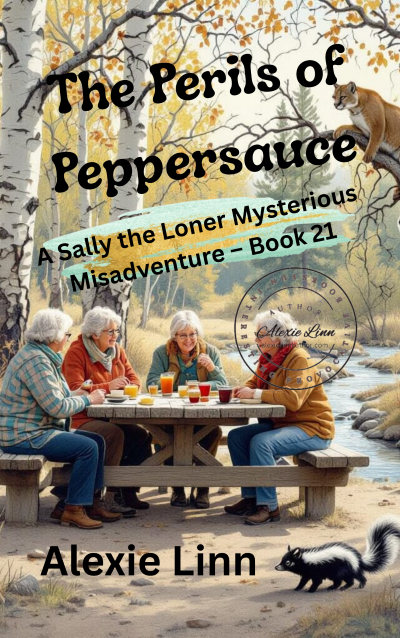
Here’s a brand-new Sally the Loner Mysterious Misadventure (Book 21) for your armchair roller coaster ride pleasure.
alexieinnauthor.com

Sally teaches an off-grid living class at Peppersauce Campground north of Tucson, AZ. It’s monsoon season. Javelinas, Scorpions, a black bear and a wounded mountain lion join the class without an invite.

After the gully-washer barreled in like an arena full of charging bulls, the road is washed out. They are forced to shelter in place, bodies and all, until the road can be opened. Some try to escape over the top of Mt. Lemmon but a forest fire has closed the road.

Sally, Rodney the mankin, and niece Joany must uncover the killer before they all become victims.

So, what were the true take-aways from the off-grid prep class?

The eBook is flying into the market at a grab it now price for a limited time; although it’s also available as a large print paperback. The audiobook will be along as soon as voice actor, Schann Stewart, can fit ‘The Perils of Peppersauce’ into her do-it-now schedule. But rest assured that while AI may have dipped its little toe into the building of the story, AI did not write it and will not be telling it.

You might also like…

Join us on:

 Facebook

Goodreads

 Amazon

Bookbub

Instagram

X

Tik Tok

You Tube Channel

Email

(A shout out to Tiny Wow for the AI assist in inspiring me to write this post. Thank you.)

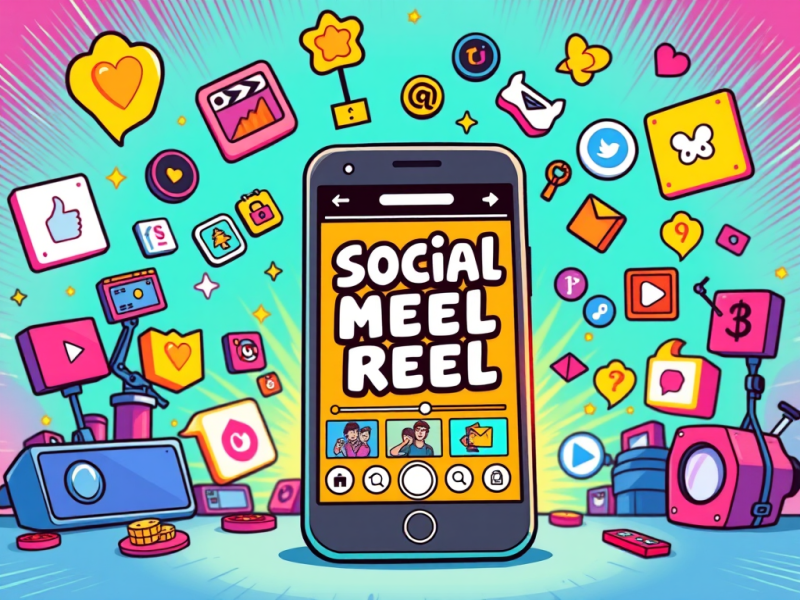
How to Create a Reel for Social Media

How to Create a Reel for Social Media

Are you itching to get in on the social media Reels craze but don’t know how to create and upload a Reel?

You’re not alone. I had the same desire and problem… but not anymore.

In case you missed the memo… A Reel is a short video of fun stuff. The sky is the limit for content. Some are hilarious; others not so much. It’s easy to click to the next one if you’re not pleased with what you see.

Reels are a specific size (*1080 pixels wide x 1920 pixels tall). It’s short in length… from .03 seconds to a maximum 90 seconds. Mine are about 30 to 45 seconds long. I use them to give viewers a quick break and to introduce my books.

The majority of Reels are vertical clips from cellphones. But not all. Mine are created with help from a couple of apps I’ve invested in.

Here’s a Reel I recently uploaded:

How did I create it? I’ll give you the nutshell version…

  1. Think of a pain point to address (Like getting unstuck…)
  2. Imagine 3-5 pictures showing a viewer how to maneuver through and out of the pain point.
  3. Collect the pictures (I use Night Café Studio to create the images) into your reels file and 2 or 3 words for each image.
  4. Next, I open up Doodly to create the reel. (Doodly is a cloud-based video editing program that lets users create whiteboard animations and doodle videos. I highly recommend and love Doodly. It’s easy to use and fun.)
  5. Set Doodly or your chosen animation program to the custom size of 1080 px wide x 1920 px tall. To keep the hand behind the images, I set the board to glass.
  6. Upload the images into Doodly as props. Place them on the board in the order you want them to draw onto the board.
  7. Add suitable music… remember to lower the volume on the music to about 12 on the scale so you don’t blast your viewer in the face.
  8. After you’ve previewed and adjusted for perfection… Export your reel in webm (for YouTube) and also mp4 (for Facebook and Instagram)
  9. Voila! Upload it to your social media platforms.

That’s it! Have fun!

I’ll leave you with this plethora of books to peruse, download and read. Until next time…

Onward!

You might also like…

Join us on:

 Facebook

Goodreads

 Amazon

Bookbub

X

You Tube Channel

Email

Note: Some links in this post may be affiliate links.

How Metadata and Keywords Boost Your Book’s Visibility

Metadata and Keywords explained, sort of…

Do you feel your eyes glazing over and your ears muffling when Metadata and Keywords enter the picture? I do. Excuse me while I rinse my eyes and clean my ears to even write this article.

I’m back and determined to conquer the two most dreaded words in my world of publishing fun and inspirational books. Are you with me?

First and foremost, there’s attitude adjustment. They’re just words, for crying out loud. Scribbles on paper. Are they really bigger than us?

No! They are not!

Think of metadata and keywords as the magical spells that guide readers. These are the two elements that lead readers to your books in a gargantuan digital library.

But you must craft them thoughtfully. With the seeker in mind.

Choose relevant keywords to make your book discoverable in our ginormous digital jungle. Remember, you want to be the one shiny object that catches the reader’s eye amidst the sea of options.

How do you become the shiny object?

Enter metadata, keywords, and search engines.

It’s search engines like Google, Bing, Duck-Duck, etc. that dig deep to locate and present readers with on-point books they are seeking. The trick is to shrink the list.

For instance… As a reader, I type ‘Cozy Mystery with Cats’ into the search engine. I get a list of a mere 6,790,000 entries that the writer has included ‘cozy’ ‘mystery’ and ‘cats’ in their keywords when they uploaded the book. Ugh!

Oh, the joy of options that search engines give…

But don’t let that deter you… You have a tidbit of control .

Here’s how.

When I type ‘Alexie Linn’ into a search engine I get a cool 1,430,000 results for this puny little writer. Really? And I thought I was invisible… And therein lies the problem.

Cyberspace is not your corner store. It’s aiming to please over 8 billion seekers of information 24/7. How does cyberspace know what, exactly, is one reader looking for? By sorting through gazillions of metadata and keywords provided by publishers. And algorithms.

What does this mean to the indie publisher?

It means that it’s totally up to the publisher to fork out the metadata and keywords. Search engines then yank documents (books and posts) containing these words out of cyberspace and offer them to the seeker.

To simplify…

Metadata is simply a plural noun that means ‘computing information that is held as a description of stored data.’ It’s information about information. A library catalog is metadata because it describes publications. My web address, alexielinnauthor.com, is metadata because it holds the key that describes Alexie Linn’s publications.

Clear as mud? Maybe not so much anymore. According to Ingram Spark, ‘Simply put, your book metadata is any data that describes your book—including title, subtitle, price, publication date, ISBN, and any …’ Metadata is a given. Not a guessing game.

Got it. Metadata is required for any uploaded book. That’s logical.

But what about keywords? And hashtags? When will it end?

Keywords are for Search Engine Optimization (SEO). Period. They are a significant word or phrase that describes a document. Cat is a broad keyword. My search engine pulled up over 6 million cozies with cats. But when I added Calico Cat, it narrowed my search to only 810,000 books. It zeroed in on the choices – bypassing a bunch!

So, if my book is about a calico cat, I should make calico cat a keyword or longer phrase to get my story 6 million times closer to being found. ‘Male calico cats’ cut the options to 756,000. About another 60,000 entries closer to discovery.

Do you see what’s happening? Keywords are what sets your book apart from the hordes. Make your keywords be the only brunette in a sea of blondes. Assuming the reader is looking for a brunette in their search…

Hashtags are the same, but completely different in their use. Not for this post.

If these two words are still making your brain ooze, I have a couple of key recommendations. One is ‘Amazon Keywords for Books’ by Dale Roberts. The book dives deeper but doesn’t drown you. I also own and am affiliated with Dave Chesson’s Publisher Rocket. Publisher Rocket is an shockingly quick and easy research tool for keywords, competition, categories and more. I have found that both of these tools are paramount to success and well worth the investment.

However, if your wallet is currently financially embarrassed, type ‘keywords for authors’ into any search engine. You will find oodles and oodles of free to read posts written on the topic.

But enough said for now about keywords and metadata. Let’s move on to this week’s much more exciting featured offer for only you valued readers of my little newsletter.

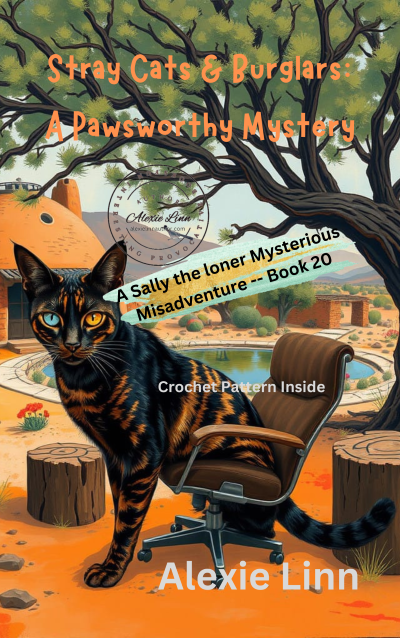
WooHoo! Book 20 of the Sally the Loner series has launched and  is available today! The eBook is only 99¢ if you grab it through the button below.

Here’s the cover…

alexielinnauthor.com

What would you do if a pushy cat came scratching at your door? A rare male calico cat. Would you shoo him away? Invite him in? Or let him take over the place while you searched for his caregiver?

Better yet. What would Sally do?

Join Sally and Rodney on this wild ride of a rambunctious, bossy, cuddly stray cat that seems to know more than he’s saying. And is the source of chaotic upheaval on Sally’s compound; including sending Sally to jail.

And while we’re on the subject of featured deals…

You might also like…

Join us on:

 Facebook

Goodreads

 Amazon

Bookbub

X

You Tube Channel

Email

Expand Your Reach: Publishing on Multiple Platforms

Publishing Wide — should you or shouldn’t you…

Publishing wide is like being a social butterfly in the literary world. Instead of putting all your eggs in one basket, you spread them across different platforms like a savvy dabbler of words. It involves making your work available on various online bookstores, not just putting all your hopes on one exclusive platform.

Advantages of wide publishing

Advantages? Oh, there’s a few.

Think increased visibility and reach. You’re not limiting yourself to a single pond; you’re swimming in an ocean of readers. Plus, more control over pricing and promotions, and the sweet scent of independence.

Challenges of wide publishing

Of course, nothing great comes without its challenges.

Coordinating different platforms can feel like herding cats. Each one has its quirks, rules, and algorithms. Plus, building a loyal readership across multiple sites takes time and effort. But hey, nothing worth doing is ever easy, right?

Don’t put all your literary eggs on Amazon’s shelf. Spread them out!

Explore other platforms like Apple Books, Kobo, Barnes & Noble, Smashwords, and more. Cast a wide net to catch a wider audience. There’s a very easy way to do that… kind of a one-stop-shop if you will. I’ll tell you about it coming up.

Royalty structures vary

Navigating the world of royalty structures across different platforms can be like decoding a secret language. But understanding how you get paid for your work is crucial in maximizing your revenue streams when publishing wide. It’s like unlocking a treasure chest of earnings potential.

Platform-specific requirements


Different platforms often come with their own set of rules. These requirements can feel like juggling multiple balls at once. But take each platform step-by-step to successfully navigate the wide publishing landscape. It’s like being a ninja, agile and adaptable in the face of challenges.

Now to the nitty gritty simplicity of what this author does…

I publish on Amazon, D2D, and Google Play. That’s it. (With one exception – Direct from me, the author)

By uploading to these three platforms, my books are available online worldwide. Readers find my books at Barnes & Noble, Kobo, Apple, and about 25 others; including libraries.

  • Amazon handles eBooks, Large Print, and Audiobooks. (Except Mama’s Morsels of Home. It’s currently available only on Amazon and only in standard print.)
  • Google Play has only eBooks.
  • But D2D is the treasure chest. D2D distributes eBooks and standard print paperbacks to Barnes & Noble, Kobo, Apple, and more… including libraries.

In conclusion

Publishing wide offers readers and writers a world of opportunities. For writers, opportunities to expand their reach, connect with diverse audiences, and maximize their earning potential.

Cheers to a future filled with creativity, innovation, and wide-reaching impact.

Onward to this post’s featured escape opportunity.

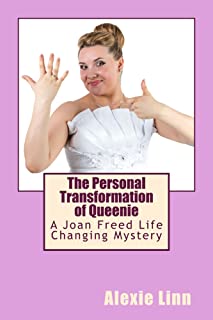
Here is Book 2 of the Joan Freed Life-Changing Mystery and Adventure Series.

Two women lay sprawled in front of my truck.  They are very dead.  Queenie sits still like a statue on the passenger side of my vintage Chevy pick-up. She looks like the circus fat lady, which she thinks she is. But she’s not laughing.  I am on sabbatical in the Kaibab National Forest. I am feeding my own free spirit with life-changing time by myself. This time is much needed and anticipated after my last exhausting coaching case. 

I know none of these women. The two dead ones seem to have known me. They have magically materialized near each of my camps for a couple of seasons now.  I met Queenie last evening. I was simply lending a hand, or in this case, my truck and nutritional expertise, to a woman in temporary need.  Our less than 24-hour kinship was an uncomplicated ‘women helping women’ moment – I thought.

While this could be a wearisome story of murder and mayhem, it isn’t.  It’s the story of how one woman’s life changing personal transformation had a ripple effect in solving a cold case and enriching personal growth.

The Personal Transformation of Queenie is on sale now for 99 cents at your favorite retailer. Or… you can download the eBook direct from the author by clicking the link below.

You might also like…

Join us on:

 Facebook

Goodreads

 Amazon

Bookbub

X

You Tube Channel

Email

Quick and Easy Home Cooking for a Very Busy Cook

Quick and Easy Home Cooking for a Very Busy Cook

Have you indie published a cookbook yet? How did you get it to upload as precise, not gibberish?

This one is finally done! And it’s ready to claim its cranny on your cooking shelf!

It was a challenge!

I learned things about Word that I never thought existed. Things like what the ‘layout’ section is for. And how to use it. Phew!

And then there’s the upload as an eBook…

The biggest learning curve was getting it to upload as an eBook. We had to ensure it wouldn’t pop-up as gobbledygook on your, the reader’s, end. The problem was keeping the precise formatting through cyberspace that recipes need. But thanks to Amazon, there’s an app for that. It’s called Kindle Create (it’s free). I only had to download; install it and follow the so-called bouncing ball.

When I opened it to get this eBook finally rolling off to you, I had a decision to make. What kind of book am I creating? The correct answer is ‘print replica’. I uploaded my ‘camera ready’ PDF. And, much to my shocked glee, we were off, running, and done in no time… a ready to ship kdp file nestled into my computer.

The app is only for Amazon. Therefor, I could not successfully list Mama’s Morsels of Home on all my usual publishing sites. The great news is that it’s currently available on Amazon Kindle in both eBook and small print.

And in case you’re faced with the same predicament, I’ll share with you how I got it done. In 9 easy steps. Here they are:

  1. Enter the recipes (with 300 dpi images) into a database like Recipe Keeper.
  2. Download the ‘cookbook’ so you can open it in a word processing program like Word.
  3. Open the ‘cookbook’ in your word processing program. Add your front matter, introduction, dedication, and back matter.
  4. Format and edit the entire manuscript to your specs (page size, page breaks, layout, etc). Plan on several edits because things change and move with the formatting. You want the manuscript to be ‘camera ready’. When it’s ‘camera ready’
  5. Quick! Save it as a PDF to freeze everything where you want it!

Hang on! You’re on the home stretch to publish your cookbook successfully!

  • Create a new project in Kindle Create – it’s free on Amazon Kindle Direct Publishing.
  • Upload your ‘camera ready’ PDF into the app.
  • Check it. Save it. Export it to your cookbook file on your computer.
  • Voila! You now have an epub fixed format file to upload as an eBook. You also have a PDF ‘camera ready’ file to upload as a print book.

But in case you missed the caveat… Amazon is the only place that the eBook file will upload to. And Amazon is the only place that offers to print with full color images. So, Amazon it is…

Please email me here if you’ve found a better way. A better way to indie publish a cookbook with color photos to all venues.

So, in the meantime… It’s done! Ready for your perusal, cooking and dining pleasure. Here it is… sporting the cover that readers chose… I like it. I think you will, too.

Heads-up!

If you’re seeking 22 ingredient recipes, you won’t find them here. We also don’t have 22 steps to score perfection. And if you’re looking for man-cave meats, this is NOT the cookbook for you.

This cookbook is for the chief cook and bottle-washer who is short on time, cash, and energy.

It is perfect for those who love easy, tasty meals… and more…

Both ingredients and methods are classified as Super Simple to Simple.

You will find:

  • Easy recipes for everyday meals
  • Hints, tips, and tales to entertain and educate
  • Casseroles and One-Pot-Wonders up the wazoo
  • Yummy Cakes with or without eggs
  • Cookies to grab and go with
  • Bobbies Sourdough Collection
  • Sauces, Beverage, and Baking mix

And a whole bunch of other stuff to put a smile on your face and a song in your tummy.

This is the Sally book of wholesome and amusing comfort foods from many Mama’s kitchens. Click here or on the book cover to get it now as an eBook or standard print.

Cheers

You might also like…

Alexie Linn Presents

Join us on:

 Facebook

Goodreads

 Amazon

Bookbub

X

You Tube Channel

Email

Understanding Book Word Counts and Reading Times

Yep. It’s All About Size and Time

Whether you’re shopping for a book for yourself or someone else, word counts matter. If you are writing a book, reading time is important too.

What’s the difference? Isn’t reading or writing a book just reading or writing a book?

Well, no. If you’re shopping for a book as a gift: there are many variables to consider. Variables like:

  • Who’s it for? Are they young, middle age, or as old as dirt?
  • What are their interests? What genre yanks them in like a magnet?
  • How long is their attention span?
  • How’s their vision? Do they read itty-bitty words well or do they enjoy large print?
  • What is their reading device? An eBook reader or is print a need?

But if you’re a writer, certain decisions must be made while you’re in the outline stage. Decisions like:

  • Who’s it for? Are they young, middle age, or as old as dirt?
  • Are you writing a flash fiction; a short story; a novelette; a novella; or a novel?
  • Genre. Each genre has a general word count to begin with.
  • What are your interests and skills?

To make outlining your story easier, here’s a general list of word counts. Use these word counts to guide your story development.

As with any topic, opinions differ. I’ve done a roundup of several opinions to give you these examples for fiction:

  • Flash Fiction is from 3oo to 1,000 words (read in 1.2 to 4 minutes)
  • Short Story is from 1,000 to 3,000 words (read in 4 to 15 minutes)
  • Novelette is from 3,000 to 20,000 words (read in 4 minutes to 3 hours)
  • Novellas are from 20,000 to 50,000 words (read in 3 to 5 hours)
  • Novels range from 50,000 to 110,000 words (read in 5 to 8 hours)

But for Nonfiction, the standards are different. There’s only two general word counts to grapple with. They are:

  • Standard Nonfiction runs from 70,000 to 80,000 words
  • Memoirs are 80,000 to 100,000 words

In the general children’s category, there are:

  • Children’s Books and Picture Books – 300 to 800 words
  • Early Readers – 200 to 3,500 words

Let me share my experience in word counts and reading times. I will also explain why I write more cozy mysteries than other genres.

The majority of my books are cozy novellas. The chapters are short (about 1,000 words per chapter). The stories are fast-paced and trope loaded. I write this way because my life is fast-paced and trope loaded. The momentum is required to keep the story (and me) moving.

I also write this way because my readers are often interrupted. They need to find a fast, light escape whenever they can.

Your book needs to be as long or as short as your story demands. It should meet your needs. The numbers I’ve provided are simply a guide. A snippet to help you on your journey… because that’s where the enjoyment is… in the reading or writing journey.

On that note, I’ll finish this post with a blurb on my latest published book. I also invite you to corral it for yourself as an eBook for less than a dollar. Plus, I encourage you to shop all my series and singles on my website: https://alexielinnauthor.com

Cheers

Join Sally on a thrilling adventure as she navigates a mysterious spine-tingling shrieker; missing robots (including Rodney), and a pyromaniac.

With her trusty walking stick in hand, Sally and Cozy Mae embark on their journey. The witty robots, Rodney, Ruth Ann, and Sparkle, are by their side. They must unravel the puzzling clues to save the day.

Will the ladies be reunited with their bots? Can the unlikely team of Sally, Rodney, and Cousin Cozy Mae crack the case of the spine-chilling screech?

Find out in this gripping tale of friendship, mystery, and misadventures.

You might also like…

Join us on:

 Facebook

Goodreads

 Amazon

Bookbub

X

You Tube Channel

Email

Book Cover Design: Convey Emotions with Size, Colors, Subject Matter, and Fonts

Can you Tell a Book By its Cover?

Yes, you can. The important stuff, anyway. You can tell it things like:

  • You have my attention!
  • You look intriguing…
  • What are you about?
  • I want to snuggle up with you in front of a cozy fire – or in front of a cooling AC as the case may be.

If you can’t tell a book those things by its cover, the cover has missed the mark.

The cover to your book is the full-page ad you’ve signed up for. Why not make it pay?

Here’s how:

Whether you’re farming the job out or doing it yourself, you will need to have a picture in your head to convey to the artist. Here’s what the artist needs to know:

  • Size
  • Colors
  • Subject Matter
  • Font

Size

Canva (my goto) digital book covers are 1410 pixels by 2250 pixels. This works perfect for 6” x 9” books.

Colors

Pick your colors by the genre and the attitude of your book. What emotion do you want to fire up? For example: pink and purple for cozy mysteries; black and red for horror stories; green, blue, and brown for dramas. Nothing is set in stone… but do you get the picture?

Click for details

Subject matter

The image should hint at what’s inside. Lightly. Here’s a typical size nonfiction cover that’s been clicked time and time again:

Click for details

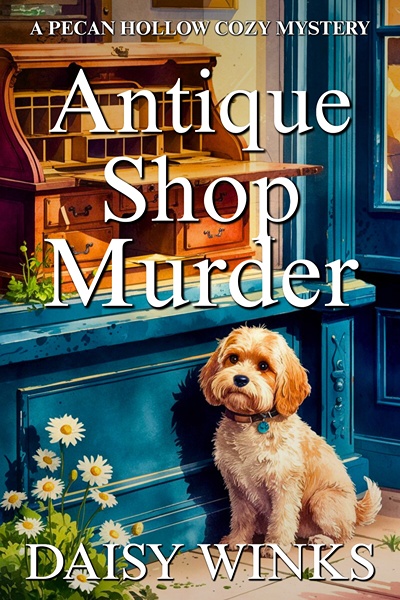
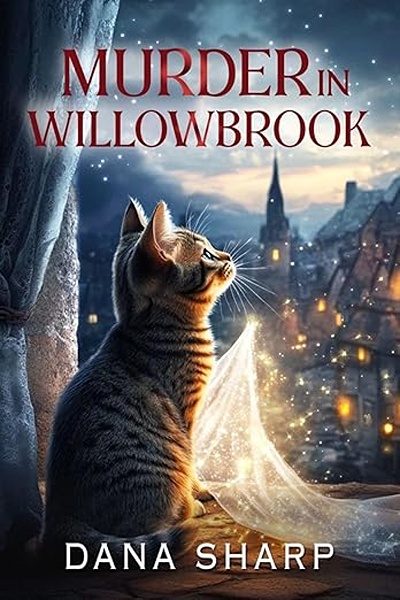
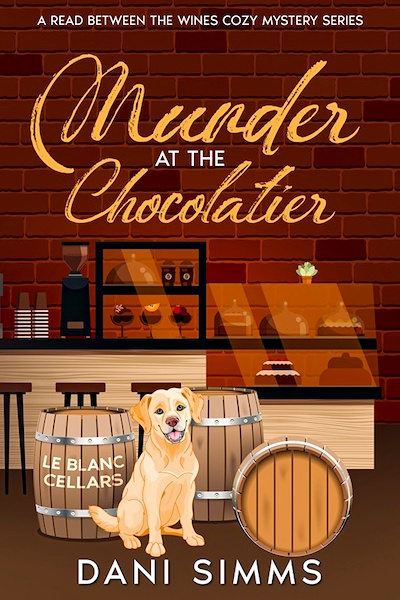
But this cozy mystery cover misses the mark entirely and is on the make a new cover list asap:

Click for details

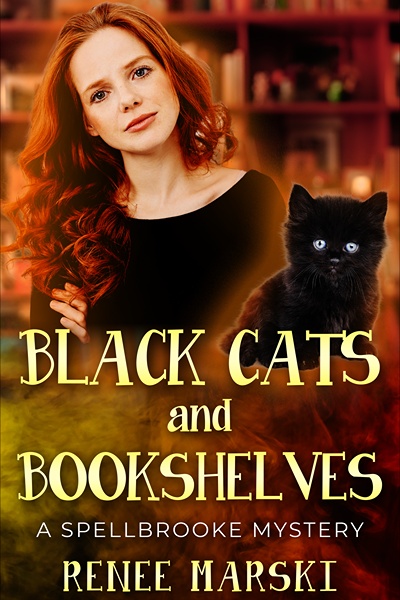
Here’s the cozy that’s had the most comments:

Click for details

And this is cozy mystery cover that breaks all the color rules but is a close second for grabbing attention:

Who can tell what will be the next cover magnet? Except that the subject of the cover should hint at what a reader can expect to be enthralled with on the inside.

Font

Choose your font for clear readability and emotion. Bloody drips hint at gore… but can the title and author be read?

The Perfect Cover

The perfect cover snags attention in a lineup of teeny tiny pictures. It reaches out and grabs a reader’s emotions to dig deeper.

Whether you choose a cover creator service or conjure it yourself with an AI cover image creator like Night Café Studio and Canva, you still have to tell them what you want produced.

Be ready to communicate the size, colors, subject matter, and font of the project.

Onward!

You might also like…

Join us on:

 Facebook

Goodreads

 Amazon

Bookbub

X

You Tube Channel

Email

The Checklist

The Checklist?

As an indie publisher one’s hats multiply like dustbunnies. Not only must you, the author, think of the book, write it, and edit it; but you must perform or cause cover creation and precise formatting for publication to happen. And you, the all-knowing author, are the head-hauncho of it all. You will take red hot poker heat for even one egads.

As for my experience, there’s nothing quite as embarrassing as forgetting to paginate or not catching misspelled words. Why? Because Daddy would have me jailed in my room for that. And Grandpa would be the jailer.

Why does it happen? Because I get in a hurry and zip over what I think I have down pat. I do. I confess. When I’m overwhelmed my mind turns to gloppy oatmeal. When the oatmeal oozes, important details go on an adventure.

But when it comes to publishing a new book, zero mistakes is better.

To reduce the risk or prevent embarrassing and time-consuming mistakes altogether, I now use a pre-publish checklist.

It looks like this:

  • First edit – for tightening, flow-test, spelling, punctuation, and …
  • Second edit – into Hemingway (one chapter at a time) for grade level, adverb overuse, passive, lazy actions, and confusing sentences… like this one.
  • Third edit – for reading experience details like titling, consistency, table of contents, pagination, copyright, and credits.
  • Fourth edit – After the cool-down period. For page-turning prose and spelling. The final step before preparing the manuscript for specific formats.

I format for *E book, **Print, and ***Narrating. Sometimes for ****Serializing.

Different Book Formats Require Different Formats — Add to the Checklist:

Note: My experience is with Amazon Kindle and D2D.

*E Books

The original manuscript is for E books. All other formats are ‘save as’ from this original manuscript.

I go through all four edits completely before copying for different formats because… wait for it…

If you change even one period anywhere after the reproductions are made, you have to remember to change the period in all the others… It’s a time consuming and hair-pulling affair.

So, before I replicate the original manuscript for other formats, I go through one more time. This time to confirm that:

  1. All the chapters are listed in proper numeric order within the Table of Contents. No chapter numbers are missing or out of order.
  2. Each chapter fits on one line of the Table of Contents.
  3. No words are misspelled unless I intend them to be.

It’s time to format.

*E-book – No changes to the original manuscript.

**Print – Paperback and Hardback – Change the paper size (or margins) to ½ inch smaller than the size of the finished book. For instance… a 6”x 9” book needs a 5 ½”x 8 ½” paper size.

Scroll the entire manuscript for visual issues and blank pages. Double check the Table of Contents for one chapter per line. Shorten chapter titles and/or reduce the font-size within the Table to make it fit – one line per chapter.

If PDF is the preferred file type, be sure to open the ‘options’; check ‘PDF-a Compliant’ to embed the fonts. Without this step, you will get an error message about embedding fonts. And it takes a lot longer to process your book for previewing. A bunch longer!

***Narrating

Put yourself in the storyteller’s shoes. Remove anything that your talented, oh so valuable, narrator cannot read… like:

  • Pictures
  • Drawings

Then it’s good to go.

Simplify web links. Instead of ‘https://www.alexielinnauthor.com’, make it ‘alexielinnauthor.com’. Make it easy for the narrator to read. And easy for the listener to hear clearly.

****Serializing

Change the ‘Chapter…’ to ‘Episode…’ at the logical ‘Episode’ divisions.

And that’s about it. Unless I’ve forgotten something.

Happy Publishing…

Alexie Linn

P.S.  Free Audiobooks……Free Audiobooks……Free Audiobooks…..

Click here to join our Audible Lovers Cornucopia group. It’s free and where you’ll find links to Free Audibles for your listening and reviewing pleasure.

The easiest way to get updates is to follow this blog and  follow me on Facebook.  New posts should appear on the Alexie Linn page – if I’ve held my mouth right… 😊

BUT! If you only want updates and pre-order deals of new releases of Books, Vellas and Audibles, the easiest way is to follow me on Amazon. When you get an email notice of a new book release, simply ask for it by the title – or for all the Alexie Linn authored titles at your favorite retailer.

Subscribe to my You Tube Channelto not miss a fun and entertaining Book Trailer. They’re short. They’re mesmerizing. And they won’t waste your time.

And just one more thing. Here’s where to find and follow me on Goodreads. Please do to get in on all that Goodreads has to offer. Goodreads is always at the very best price. It’s FREE!