It’s Your Name – Choose It Wisely

It’s Your Name – Choose It Wisely

What’s in a name? Does your author name matter? Should you write under your given name? Should you borrow someone else’s name?

What’s in a name?

Taking these questions one-by-one, here’s my experience for you to consider.

What’s in an author name?

Reputation. What will be the first thought prospective readers will have when they see your author name?

If you saw a book written by ‘Charles Manson’, would you examine it, bury it, or grab it and race to the checkout? What would you expect that book to be about? Is that the kind of book you are itching to write? Would you feel cheated if you paid money for a book to find out that ‘Charles Manson’ was a pseudonym – not the real deal?

Aside from the obvious mislead to direct readers to your book, using the name of a famous – or infamous – person could ruin you in too many ways to list. Quash that shortcut to fame you won’t want in the long run.

If you’re going to write using a pen name, do your homework. Is it already being used? Is it trademarked? Will you be stepping on someone else’s toes? How many dollars and how much time do you want to spend on promoting the ‘other’ author’s works?

Does your author name matter?

It does, in my opinion. I have written under four pen names. At first, I thought I had to use my real name. Then I asked myself why when I’m not particularly fond of my ‘real’ name. I don’t hate it, it’s just a ‘blah’ name. It’s hard to spell. And I get growly when I have to repeat how to spell it.

Give me simplicity in pronouncing and spelling. I chose ‘Alexie Linn’ because it’s easy to say. It roles off the tongue. And it’s an anagram of my given name. I, the person am hiding in there somewhere.

If I took on the chore of rebranding my works, I’d choose ‘Aaralyn Rae’ for my new name.

“Why?” you ask. Because Aaralyn means ‘beautiful melody, a song’; Rae means ‘grace, timid, and bashful’. It defines me – or who I want to be. It’s okay that you, the reader, aren’t going to look up the meaning of my name. It comforts me and gives me the courage to keep on writing.

The name is suitable for any genre I care to write. If it isn’t, I’ll choose another name for the project.

Should you write under your given name?

You absolutely should if you don’t want anonymity… if you’re not timid or bashful. And your name is not John Jones. Not that the name is bad, but how many readers will you lose to the six hundred other John Joneses?

It’s your name, choose it wisely…

Choose a pen name that you will be proud of and want to use. If you change it, you’ll be starting over with building an entire new reputation and brand. A frustrating endeavor in my experience.

Happy Naming…

Alexie Linn

P.S. Since this new, finely focused blog is just getting started, the easiest way to get updates is to follow this blog and  follow me on Facebook.  New posts should appear on the Alexie Linn page – if I’ve held my mouth right… 😊

If you only want updates and pre-order deals of new releases of Books, Vellas and Audibles, the easiest way is to follow me on Amazon. When you get an email notice of a new book release, simply ask for it by the title – or for all the Alexie Linn authored titles at your favorite retailer.

And just one more thing. Here’s where to find me, follow me, and get deals on Goodreads. Please do to get in on all that Goodreads has to offer. Goodreads is always at the very best price. It’s FREE!

Thicken the Plot by Stirring the Pot

Thicken the Plot by Stirring the Pot

Thicken the Plot by Stirring the Pot

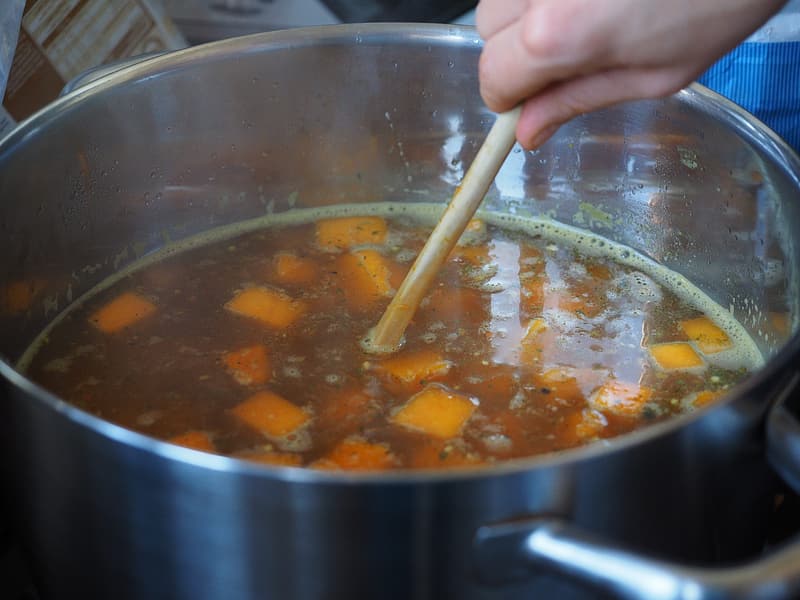
The plot is what the story is about – in a one stewing pot.

For example:

The Corn Rots at Midnight is about a young woman who needs big money in a hurry. To get the big bucks, she took on the traditional man’s role of hauling corn; from plowing through 2-foot-deep mud in the field to dropping the load at the cannery. Maneuvering the monster truck and trailer through the muck and mire was easy compared to the mandatory survival skills to stifle the harassment from the male drivers. Can she succeed without breaking a nail, or worse — taking them out?

If you dissect the above ‘story-in-a-nutshell’, you’ll see that it answers all the 5-W’s of the simple plot of a story.

  1. Who
  2. What
  3. Where
  4. When
  5. Why

All that’s missing is the ‘How’.

‘How’ is the meat of the tale. That’s the part that the characters have to write. And you have to let them. You are the tool that stirs the pot to keep everything and everybody bubbling through to a lip-smacking, clean-plate end. Are you hungry for a fun and interesting read yet?

If the subliminal hint to go grab a book didn’t side-track you, what if you draw a blank at the ‘How’ to thicken the plot?

Sometimes we need help to spice it up and keep it brewing. And in this day of internet… Google specifically… it’s fast and easy to kick it up a notch.

Ask your search engine to find ‘plot generators’. In a nanosecond you’ll have 168,000,000 options to bust down the infamous writer’s block wall and get your characters moving again. But be careful what you ask for. Use only what you need. Maintain cohesive coherency at all costs lest you wind up editing out 12-grain mush to get to the meat. Readers demand steak and eggs. They flush the mush.

The good news is that search engines aren’t your only option for thickening the plot.

For those of us who don’t always have Google and other search engines at their fingertips, here’s where you can grab books – even a deck of cards (an affiliate link)– to bust through writer’s block and get more meat into your story. Snag the book or cards now, before you head out to your mountain top retreat with no internet.

On that note…

Happy Trails and Tales,

Alexie Linn

P.S. Since this new, finely focused blog is just getting started, the easiest way to get updates is to follow this blog and  follow me on Facebook.  New posts should appear on the Alexie Linn page – if I’ve held my mouth right… 😊

If you only want updates and pre-order deals of new releases of Books, Vellas and Audibles, the easiest way is to follow me on Amazon. When you get an email notice of a new book release, simply ask for it by the title — or by all Alexie Linn titles — at your favorite retailer.

And just one more thing. Here’s where to find and follow me on Goodreads. Please do to get in on all that Goodreads has to offer.

Collaborate for success…

Collaborate for success…

In my experience, the very best collaborator is the one in your head.

Collaborator at work

Why is the very best collaborator the one in your head, you ask?

Because the collaborator in your head is the one you can control. You, the author, get to be boss of:

  • When and how fast the writing happens
  • How characters behave, including the dialogue
  • The scenery and how it harmonizes throughout the story

Just like any job you hire on for, there has to be a strong leader and a more malleable follower in order to complete a cohesive picture that flows from beginning to end. Without a leader, dare I say the one who had the bright idea in the first place, you get an abstract that invites the viewer to flesh out the meaning of the story.  You get gibberish. You get unfinished business.

I know this because I’ve been one side of a collaboration three times. Here’s what happened:

The first time I paired up with a fellow writer that lived about a thousand miles away. We wrote through snail mail.

It went well. We had a great story going. Until life happened and it petered out. Our priorities changed and one, or both, of us left the room.

The second time I got bit by the collaboration bug, my partner was my drama queen mother. We were camped in the Wenatchee National Forest and being the home base for my daughter, the corn hauler.

The story, ‘The Corn Rots at Midnight’, was on an excellent roll as Mama the leader, and me, the typist/follower. We were into the first edit when the corn hauling job was over and mama lost interest. I didn’t have the confidence to take over and go it alone.

The third time I took it on was with a long-distance cousin. But this time we had email to communicate.

Yep, it was my idea. Over our 30-year span of genealogy penpaling, she’d not mentioned her desire to be a writer… until that one time. I glommed on and suggested we collaborate on a Vella serial. I had 20+ successful publications under my belt, including the editing, and grabbed the bull by the horns. She expressed fear and concern over spelling and grammar. I assured her that I had that bug in the jar. It’s time to flap her wings and soar.

We sprinted out of the gate into a bang-up story. Our characters were quirky and striking. The suspense captivating. With our history of genealogy, the story was aptly titled, ‘The 156-Year-Feud Between the Murphy’s and the Nobles’.

Again, we were on a roll. But my cart raced while hers was in sightseer gear. She felt rushed and ran over. We had our first misunderstanding in more than 30 years of being friends and sounding boards.

Sadly, that 156-year feud will never be settled. And, at this writing, we’ve both lost a dear friend.

Will I give collaboration another shot? If I do…

Here’s what I will do to collaborate for success before the preface gets written:

  • Clearly define each of our rolls as with a job description
  • Discuss and agree on goals and time expectations
  • Decide the procedure for settling creative differences in a positive direction

Writing is a business. It has to be operated and respected as a business to be successful.

Choose your collaborator with cautious optimism. And don’t forget to lighten up; have fun at every switchback while you’re careening up and down that mountain.

Happy Collaborating,

Alexie Linn

For a #1 experience…

follow me on Facebook

follow me on Amazon.

Dialogue. Who Gives a…?

Dialogue. Who gives a …?

What’s most important to satisfy when you’re writing dialogue?

  • The Story
  • The Audience
  • The Character
  • The Scene

It’s all the above. But one item in particular is critical to reader success. Did you choose the second item on the list? The audience?

Dialogue is what drives the story forward.

If the reader can’t pronounce the words or has to read with an open dictionary at their side, the story gets lost. It won’t get read. People who read encyclopedias for entertainment exist but are far and few between.

The big book is the dictionary. You can’t see the book she’s trying to read.

If you’re writing to stretch the reader’s vocabulary, there’s a quick and easy fix for that. Include a scholarly character that other characters tolerate because they’re so brainy. But throw in another character who can translate.

Stretch their vocabulary…

For example. Mary Linn, the young gravestone hunter, is interviewing a psychologist (the scholar). The interview is for the bully smashing videos she and Valinda are producing.

Psychologist: “Drawcansirs are narcissists on steroids. They subdue others to make themselves feel exceptional.”

Mary Linn: “Drawcansir? What’s a drawcansir? You lost me. Is there a simpler way to say that to first graders?”

Psychologist, chuckling: “Sorry. Big words come with the territory. Drawcansir is another word for a bully or a tyrant. Narcissists are selfish people who are in love with themselves. They’re egomaniacs.

Mary Linn: “So, if we are explaining bully’s behavior, we can tell them that ‘Bullies don’t say ‘One for all and all for one’. They say ‘All for me and me for me’. And that bullies are show-offs on Tony-the-Tiger fuel. They scare you to make themselves feel superior or smarter than you. They’re not.”

Psychologist: “Yes.”

To double-check the readability of the dialogue, I use a fast and easy editing software called Hemingway. Hemingway analyzes a block of text and gives the grade level of the text as well as other faux pas you need to be aware of. It was a free download if you don’t need all the bells and whistles. But it’s less than $20 if you choose to buy it. This article is at a 4th grade level, according to Hemingway.

One note to be aware of: Copy the text to Hemingway to check for readability. But make corrections on your original. If you copy and paste from the app, you’ll lose formatting, like spacing and bullets. And you’ll have a strange background to remove.

And… at this writing, Hemingway is not an affiliate of mine. But it might be someday.

To summarize, write dialogue and dialects to fit the audience first, then the story, the character, and the scene. In that order.

Happy dialoguing,

Alexie Linn

P.S. Since this new, finely focused blog is just getting started, the easiest way to get updates is to follow me on Facebook. New posts should post on the Alexie Linn page – if I’ve held my chin right… 😊

If you only want updates of new releases of Books, Vellas and Audibles, the easiest way is to follow me on Amazon. Then you’ll know to check with your favorite retailer.

What’s Thanksgiving?

What’s Thanksgiving?

When I was really young, Thanksgiving was Grandma’s house, tons of cousins and food galore.

When I was a little older, Thanksgiving was Mother-in-law’s house with in-laws and food galore.

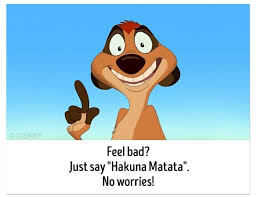
Now that I’m really older – with no Grandma’s or Mother-in-law’s house to go to… Thanksgiving is a Marie Callender’s Turkey Pot-pie; a Hostess Apple Pie with a pint of Ben and Jerry’s on top; and finding animated Disney quotes to share with you – all my in-laws and cousins out there in cyberspace.

Have I gone too commercial? Or have I found comfortable perfection?

Happy Thanksgiving Everybody!

This one’s for you! Because you never know what’s around the corner…

Too Blessed To Be Stressed…

Shapeshifting Phenomenal Characters – Part 2

Shapeshifting Characters – Part 2

Often a character will reinvent themselves along the way. What I thought was a kohlrabi will morph into an ear of corn – slim with silky hair. I’ve even had them change from blonde pale-skin to a dyed blonde black-skin.

You were a Kohlrabi in the beginning…

I have learned to let them shift, nestle into themselves, and become who they really are. The hard part is editing their character from the beginning when they pull shenanigans like black to white – or white to black. I only hope that they do it soon instead of waiting until the story is ¾ of the way through.

And, since I have to literally become each of these characters, the question my other half asks at the door is… “Who are you? What have you done with Alexie?”

This shapeshifting is so fresh in my mind because two of the individuals in my current work in progress have stolen Chapter 23.

I thought Jerry was a body building blonde displaced surfer… but then he tells me he’s a body building black man from the Watusi tribe that dyes his hair blonde. Then he hints that he might be Ralph, the big, burly, gruff café owner’s lover. Yikes! What’s a writer to do?

Let them have their way. It’s their story. Personas have to be allowed to improv as they see fit lest they lose their dimensional qualities and become flat. You, the writer, are committed to working it in and flex around their quirks.

High quality writing is so much more than throwing words on paper. The words have to ebb and flow according to the people, the story their showing, and make perfect sense. It all could – and often did – happen.

Happy Character Building,

Alexie Linn

P.S. Since this new, finely focused blog is just getting started, the easiest way to get updates is to follow me on Facebook.  New posts should post on the Alexie Linn page – if I’ve held my chin right… 😊

If you only want updates of new releases of Books, Vellas and Audibles, the easiest way is to follow me on Amazon.

Shapeshifting Characters Rule

Shapeshifting Characters Rule

As a reader, how do you connect with characters in a story? What pulls you into the chat, the treasure hunt, or the car careening down the mountain with no brakes?

Characters are shapeshifters

For me, character description plays a part. But less is more.  Too much detail all at once will prevent me from participating in the story because I’m trying to picture the character instead of holding the ladder for his or her escape.

Here are the rules I use.

Add physical description details if:

  • It will further the story – You’re making a police report on a culprit or missing person
  • It emphasizes a quirk of the character – the empty space where there should have been a finger had to have been a challenge when he shaved his head daily to keep it shiny.
  • It sets the mood – I focused on the moon reflecting from his shiny head, not the black circles around his demonic eyes. That’s how I played dead.

Work the shapeshifting details in when it’s appropriate to give your characters dimension.

A private eye might list the height, weight, hair color (or none), clothing, and stature. But have you ever met someone on the street and walked away with a detailed physical description? If you do, that’s your quirk. Write yourself into a story!

Physical description can be worked in with memories.

 ‘I pictured the limp, the flowered cotton dress that swayed and flounced with every step. It drags the ground on her short body. I shivered at the cleaning nightmare for that dress. When I saw the dress dragging the ground, it blanked out the hairdo that looked like she’d stuck her finger in a light socket.’

Flesh out the character’s physical description through the actions – the limp, the dragging dress, and the unruly hair. The physical description, detailed relevantly, adds to the rounding out of a character’s personality.

And there you have the next crucial step to building a character readers can connect with.

Happy tales and trails,

Alexie Linn, the Author

P.S. Since this new, finely focused blog is just getting started, the easiest way to get updates is to follow me on Facebook. New posts should post on the Alexie Linn page – if I’ve held my chin right… 😊

How to Plant a Captivating, Quirky Character Garden to Prompt Your Writing Process

How to Plant a Captivating, Quirky Character Garden to Prompt Your Writing Process

Captivating characters are cultivated…

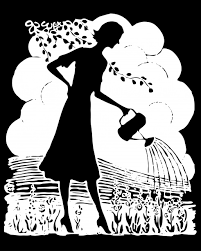
Captivating characters aren’t born. They’re cultivated. You, the writer, plant the seed, water it, fertilize it (with the good stuff or manure), and get out of its way. You’ll need to prune it now and again, but a character will take on a fascinating life of its own if you let it.

Captivating characters start with a quirk…

Start with a quirk

When I’m out and about in the world, I pay attention to people. And, yes, at times, I compare an individual to a garden fruit or vegetable. What makes them memorable?

An individual’s head (or hair) style could be a fruitful starting point.

When I see a person with a shaved bare head, they might become a melonhead. Are they a cantaloupe (rough skinned and lightly veined), a honeydew (smooth and Martian-like), or an oblong shaped watermelon? Why do they choose to shave their head? They’re not lazy. It’s a lot of work to keep one’s head as polished as a bowling ball.

Ask them (or yourself) ‘Why shave their head?’ Is it for:

  • Cleanliness
  • As a clique ritual
  • To be closer to their god
  • They thrive on tempting melanoma fate
  • They’re rebelling against hair stylists or comb manufacturers
  • He or she wants to be loved for their personality – not their good looks
  • They’re in the depths of chemotherapy and prefer shiny bald to patchy clumps of hair

The answer to this question could be the quirk you need in the writing process to plant an enchanting character like Joan Freed.

Joan Freed — In the Beginning…

Joan Freed started out as a Hubbard squash. Hard-shelled, soft inside, imperfect shape, nourishing, and is there for the long haul. She has many quirks. They grew from the previous life she lived. Joan would never take the time or attention to shave or maintain a shaved head. Mirrors are far and few between… is she a covert vampire?

An excellent writing prompt in the writing process is to: 1) Find the quirk. 2)Listen to it. 3)Water it. 4)Fertilize it. 5)And prune it only as necessary. But let he or she mature into a robust, entertaining, and steadfast character that readers will love.

And that’s the Voila! A star is born.

Happy Character Gardening…

P.S. Since this new, finely focused blog is just getting started, the easiest way to get updates is to follow me on Facebook. New posts should show up on the Alexie Linn page – if I’ve held my chin right… and linked the correct address…😊