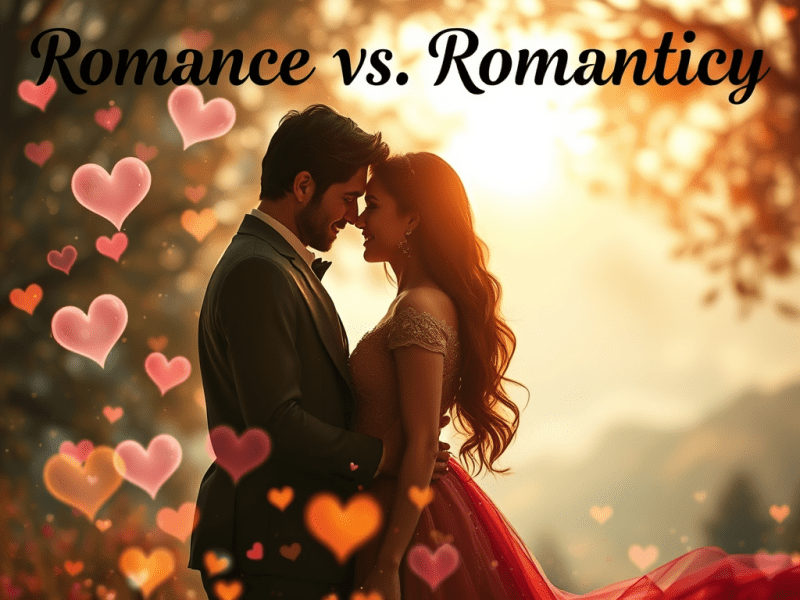
Romance or Romanticy? What’s the Difference?
In the vast landscape of literature, the genres of romance and romanticy offer readers enchanting escapes into worlds filled with love, passion, and adventure. While both genres share the common thread of romantic relationships, they diverge in their storytelling approaches and thematic elements.
The primary difference lies in their elements: romance typically focuses on realistic relationships and emotional connections, while romanticy incorporates fantastical or magical elements, creating a blend of romance and adventure in imaginative settings.
Romance novels tend to focus on the emotional connection between characters, often grounded in reality, whereas romanticy incorporates fantastical elements that elevate love stories into extraordinary realms.
This article aims to explore the nuances of each genre, helping readers discover which one resonates with their personal tastes. Whether you’re a die-hard fan of contemporary love stories or an adventurer seeking magical romance, understanding the distinctions between romance and romanticy can enrich your reading experience and guide you to your next favorite book.
The Evolution of Romantic Literature
Romantic literature has a rich history that can be traced back centuries, where star-crossed lovers and heart-wrenching dilemmas reigned supreme. From the classic tales of Jane Austen and the Brontë sisters to the contemporary heroes and heroines of today, romance has always been about the emotional connection between characters—think of it as the ultimate will-they-won’t-they situation!
As society has evolved, so have the stories we tell, giving rise to an exciting new subgenre: romanticy, where love meets the fantastical. It’s like adding glitter to a perfectly good cupcake—because who doesn’t want a sprinkle of magic while falling in love?
Why Genre Matters in Storytelling
Genres are more than just labels; they’re like the friendly neighborhood signs that guide you through the vast landscape of literature. They help readers find what they’re in the mood for—whether that’s a swoon-worthy love story or a whimsical adventure tinged with romance. By understanding the distinctions between genres, you can make more informed choices about what to read (and what to avoid, because nobody wants to accidentally pick up a 1,000-page historical epic when you’re looking for a lighthearted love story!). Plus, knowing your genre helps storytellers craft their narratives and fulfill reader expectations. Think of it as your very own GPS for the literary realm!
Characteristics of Romance Novels
Romance novels are like the reliable best friend you call when you’re in need of a happy ending. At their core, these stories focus on the relationship between the main characters, typically leading to a satisfying resolution. They often feature deep emotional exploration, tension, and chemistry that will have you rooting for the couple (and perhaps squealing a little, too). Expect heartfelt confessions, dramatic misunderstandings, and the occasional eye-roll-worthy love triangle. But fear not; there’s always a guaranteed happily-ever-after (or HEA for the acronym aficionados out there)!
Common Tropes in Romance
While romance is diverse, certain tropes pop up like dandelions in spring—think of them as the bread and butter of the genre. You’ve got the classic enemies-to-lovers scenario, where two feuding characters find themselves irresistibly drawn to each other. Then there’s the friends-to-lovers trope, perfect for those who love the idea of pining after the person you’ve known forever (awkward moments included!). Don’t forget about the ever-popular “fake relationship” trope, where two characters pretend to be an item for various reasons, often leading to the realization that they might just be perfect for each other after all. You see, tropes are the delicious seasoning that adds flavor to your romantic dishes!
What Sets Romanticy Apart?
So, what’s this romanticy thing all about?
Picture a cozy evening where you curl up with a book that has all the heart-fluttering elements of romance, but with a twist of magic, fantasy, or the surreal. Romanticy merges the excitement of romance with the limitless possibilities of imagination. Whether it involves mythical creatures, parallel universes, or spellbinding quests, romanticy takes readers beyond the constraints of reality, allowing them to explore love in ways they couldn’t in traditional romances. It’s basically romance with a magical topping—like adding whipped cream to a hot cocoa!
The Role of Fantasy Elements in Romanticy
Fantasy elements in romanticy are like the sprinkles on your cupcake—they may be small, but they bring a whole lot of joy!
These elements serve to heighten the stakes and deepen emotional connections. Imagine navigating a magical portal only to find out that your soulmate is a dragon shifter—or that your heartthrob is the reluctant heir to a powerful kingdom. Such fantastical twists can work wonders for plot development and character arcs.
Romanticy allows for exploration of love in various dimensions, literally and figuratively, all while keeping the core focus on heartwarming (or heart-wrenching) romantic bonds that can flourish against any backdrop.
Key Differences Between Romance and Romanticy
Plot Structure and Conflict Resolution
At a glance, romance and romanticy might seem like two peas in a sentimental pod, but when it comes to structure and conflict resolution, they take different paths.
In traditional romance, the plot typically revolves around the emotional journey of the couple, often resolving conflicts grounded in relatable hurdles—miscommunication, trust issues, and the ever-dreaded ex-lover resurfacing.
Romanticy, meanwhile, usually layers its romantic storyline with fantasy-driven plot twists and world-building that can complicate conflicts uniquely. Characters might face external threats like an ancient curse or an impending war, adding a whole new level of urgency to their romance.
Character Development and Relationships
Character growth and relationship dynamics also differ between the two genres.
In romance, character arcs often hinge on personal development—those moments of self-discovery, acceptance, and love that lead to transformation.
In romanticy, however, while personal growth is still key, the fantastical elements can push characters to confront challenges that fundamentally alter their identities or destinies. Plus, relationships often explore deeper themes, such as destiny, sacrifice, and the power of love transcending time and space.
So, whether you’re looking for emotional depth or an epic love story with magical overtones, both genres have something to offer—just make sure you pick the right one for your reading adventure!
Now that you’re armed with the knowledge to navigate the worlds of romance and romanticy, go forth and choose your next literary journey! Happy reading! Romance or Romanticy? Which Genre is for You?
Recommendations: Best Reads in Romance and Romanticy
Top 5 Romance Novels to Consider
1. **“The Kiss Quotient” by Helen Hoang** – A heartwarming romance with a twist, where an autistic woman hires a male escort to help her with love.
2. **“Beach Read” by Emily Henry** – Two authors in a creative rut swap genres for the summer; hilarity and sparks ensue!
3. **“Red, White & Royal Blue” by Casey McQuiston** – A delightful tale of political love, royal shenanigans, and a whole lot of humor.
4. **“The Hating Game” by Sally Thorne** – Office rivals turned lovers—because who can resist the tension?
5. **“It Ends with Us” by Colleen Hoover** – A powerful and emotional read that dives deep into love’s complexities.
Must-Read Romanticy Titles
1. **“A Court of Thorns and Roses” by Sarah J. Maas** – A beautiful blend of love, fae, and epic battles.
2. **“The Cruel Prince” by Holly Black** – A tale of political intrigue in the treacherous world of faeries, where love is just another weapon.
3. **“Serpent & Dove” by Shelby Mahurin** – A witch and a witch hunter forced to marry? Pure chaos, with a side of sizzling romance.
4. **“An Enchantment of Ravens” by Margart Rogerson** – Stunning artwork and a love that blurs the lines between worlds.
5. **“The Night Circus” by Erin Morgenstern** – While not strictly romance, the love story here is mesmerizing and unforgettable.
Conclusion: Choosing Your Ideal Genre
Reflecting on Your Preferences
At the end of the day, the best genre for you is the one that makes you feel something—whether it’s the butterflies of attraction or the thrill of adventure accompanied by a dash of romance. If you’re drawn to heartfelt connections, dive right into romance. But if you yearn for fantastical escapades with a side of love, go ahead and embrace romanticy.
Explore Both Genres
Why limit yourself? Reading is an adventure in itself, and genres are merely suggestions. Don’t be afraid to dip your toes in both romance and romanticy—the world is full of stories waiting to sweep you off your feet. After all, who doesn’t love a little magic with their love story?
In the romance genre, authors like Nora Roberts, Julia Quinn, and Jennifer Crusie are well-known for their engaging love stories. For romanticy, authors such as Sarah J. Maas, Holly Black, and Leigh Bardugo are celebrated for their captivating narratives that intertwine romance with fantasy.
But if you’re a died in the wool cozy mystery aficionado, I have 2 NEWSFLASHES for you…
The first one is that Audiobooks.com is having a sitewide 50% off sale. That means today you can grab ‘The Price of Luck: a Pawsome Conundrum’ audiobook for about $2.50! Closer to a steal than a deal.

When Charlemagne (the pup) vanishes to uncover a lottery ticket alongside the road, Sally embarks on a tangled quest to reunite the ticket with its rightful owner. But time is ticking, and a mysterious, determined thief is hot on her trail.
Will Sally and Joan crack the case before the ticket – or she — expires? Should she just cash it in and keep it for herself? What’s an 87-year-old spunky woman to do?
What would you do? CLICK HERE FOR THE DEAL or CLICK HERE FOR A FREE REVIEW COPY
The second piece of news is that Book 16 of the Sally the Loner series, ‘Too Many Bodies and a Burro’, is now available in audiobook.
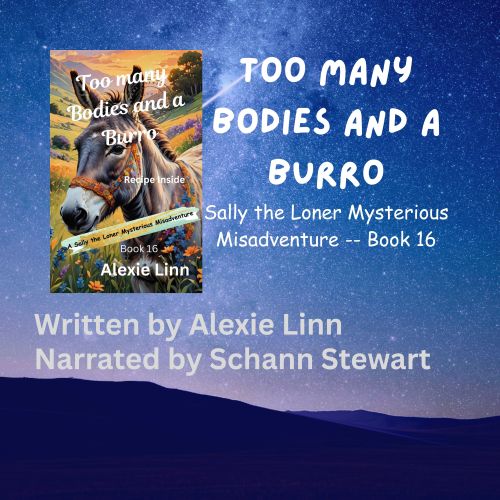
Roadtrip! Join Sally and Rodney on their first ‘vacation’ road trip ever. A road trip with a purpose. A threefold purpose.
- Get Sally off the place for more than a day after the infamous ransacking that she came home to. The last time she worked the summer job up north.
- Document Rodney’s heritage. And
- Locate and photograph Sally’s great great Grandpa Forester’s landing place in the United States.
Even with all the security measures in place, is Sally’s place secure enough? Will Rodney get to see the lab the first microchip was built in? Which grandpa is that, anyway? And what about grandma? Can they get to her birth-lab as well?
Will Sally finally unravel the mystery of great great grandma Rachel’s many surnames when they married. Why did she and grandpa have to escape Texas to the mild Pacific Northwest? Is the threat still there?
CLICK HERE TO BUY THE AUDIOBOOK or CLICK HERE FOR A FREE REVIEW COPY
Both stories are narrated by none other than the Queen of Voices, Schann Stewart. And for you valued reviewers… note that free review copies are available.
AND You might also like…
(A shout out to Tiny Wow for the AI assist in inspiring me to write this post. Thank you.)



 Alexie Linn, the Author, and Homespun Rebel